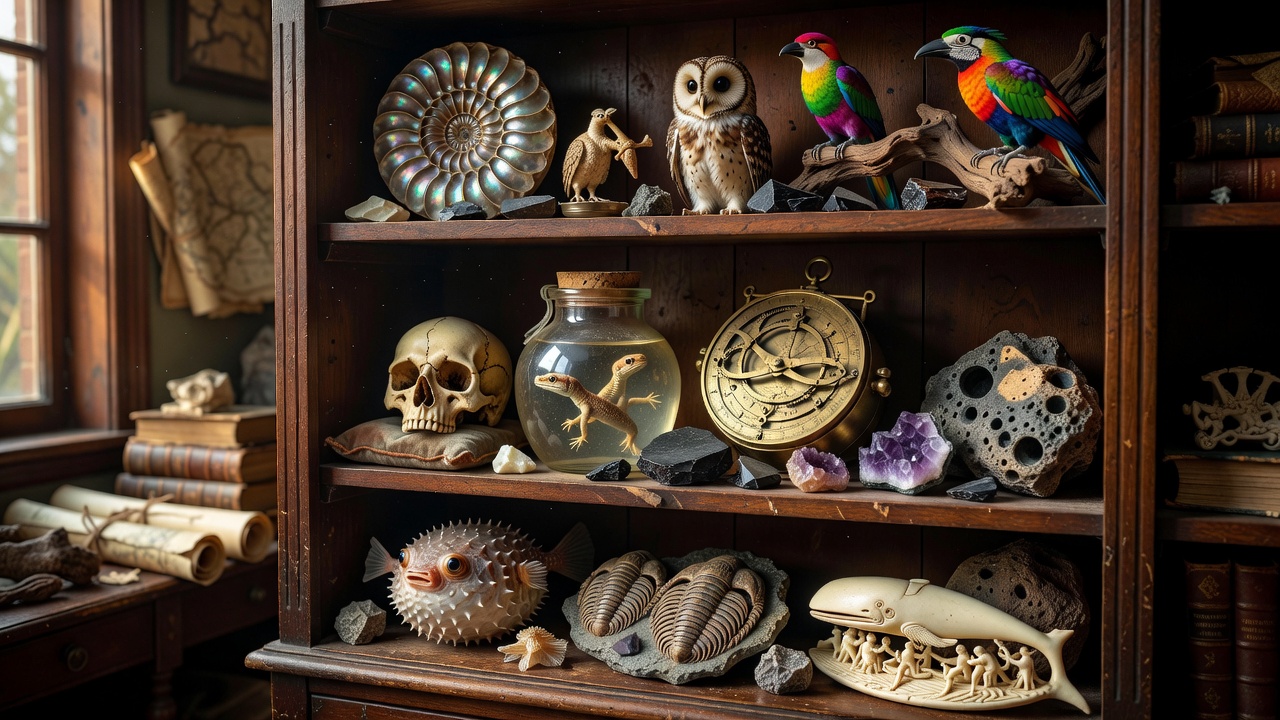
The inclination to collect peculiar, unsettling, or enigmatic items is as old as civilization itself. Long before public museums existed, wealthy Renaissance scholars curated Wunderkammern—or "Cabinets of Curiosities"—filling rooms with dried sea creatures, strange minerals, taxidermy, and unverified relic artifacts.
The Need to Categorize the Uncanny
Psychologists note that human beings experience intense cognitive engagement when confronted with objects that defy standard categorization. A specimen that sits on the boundary between science and myth forces the brain to actively re-evaluate its assumptions about nature.
Morbid Curiosity and Mortality Processing
Exhibitions featuring pathological bone formations, funeral art, or macabre medical instruments offer visitors a controlled environment to process fear and mortality. By placing dark aspects of existence inside glass display cases, society renders them safe to examine and study.
Modern Resurgence in Oddity Collecting
In the digital age, interest in weird museums and oddity courses has surged. People seek tangible, strange physical experiences as a counterweight to uniform, digital screens. Learning how to preserve and archive these unusual objects has become a thriving field of alternative education.